Water where it shouldn't be in Charleston? Creek, river or pipe: one number for Charleston ZIPs. One call · You choose who to hire
Fixly ProCharleston, WV Water Damage Line
Charleston water damage● Direct line
(855) 555-0131
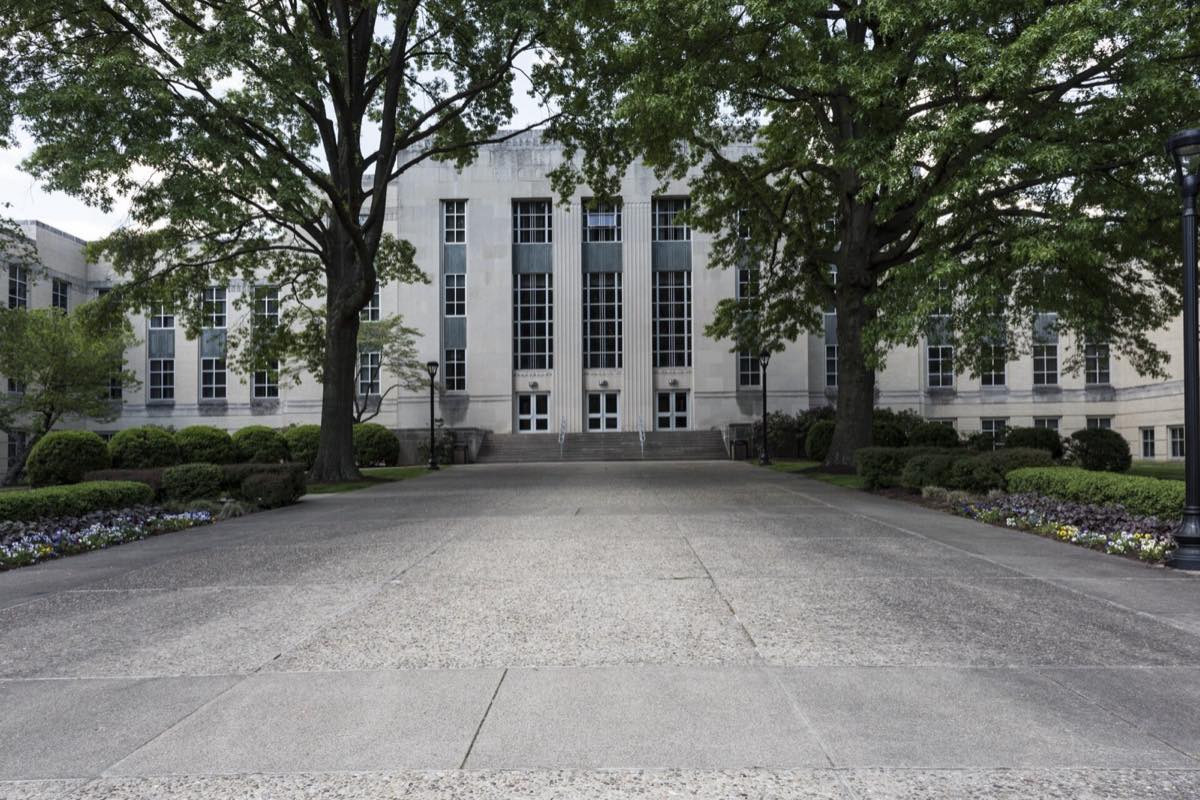
West Virginia State Capitol and its gold dome in Charleston under a clear blue sky, seen from the front steps
West Virginia State Capitol · Kanawha Boulevard East, Charleston
Where the Elk meets the Kanawha

Restoring Charleston, WV homes after leaks, backups and river water

Tap to call now(855) 555-0131
2530125302253042531125314
The line opens with a quick recorded request: key in the Charleston ZIP where the leak is. Enter it on the keypad, using a chip above or the code on your mail, and you are connected to a company answering for that part of town. Stay on through the prompt.

Creek water up a hollow, a pipe that froze in a 1950s house, a basement drain running backward. Dial once and your ZIP decides which independent restoration business picks up; ask it directly about extraction, drying and mold work.

  • One number, any phone
  • Hiring is your call
  • Independently owned providers
Five digits, then the call is routed25301 to 25314 and beyond
Ask for moisture readingsAnd a written scope
Routed by ZIPDowntown to South Hills
Check the WV licenseHow-to further down
Know your coverageHomeowners, flood or sewer rider
The four calls Charleston makes most

Kanawha backwater, a split line or a reversed drain?

Name it in the first sentence once you're connected. Creek water, a split supply line and a reversed floor drain each need different gear and a different insurance conversation.

4+ inchesof rain in one day, August 16, 2026

Flash flood down a hollow

On August 16, 2026 more than 4 inches fell in a day. Valley Road in Edgewood ran like a river and Garrison Avenue homes filled. Runoff like that carries mud and sewage, so wet drywall and carpet usually come out.

Call (855) 555-0131 →
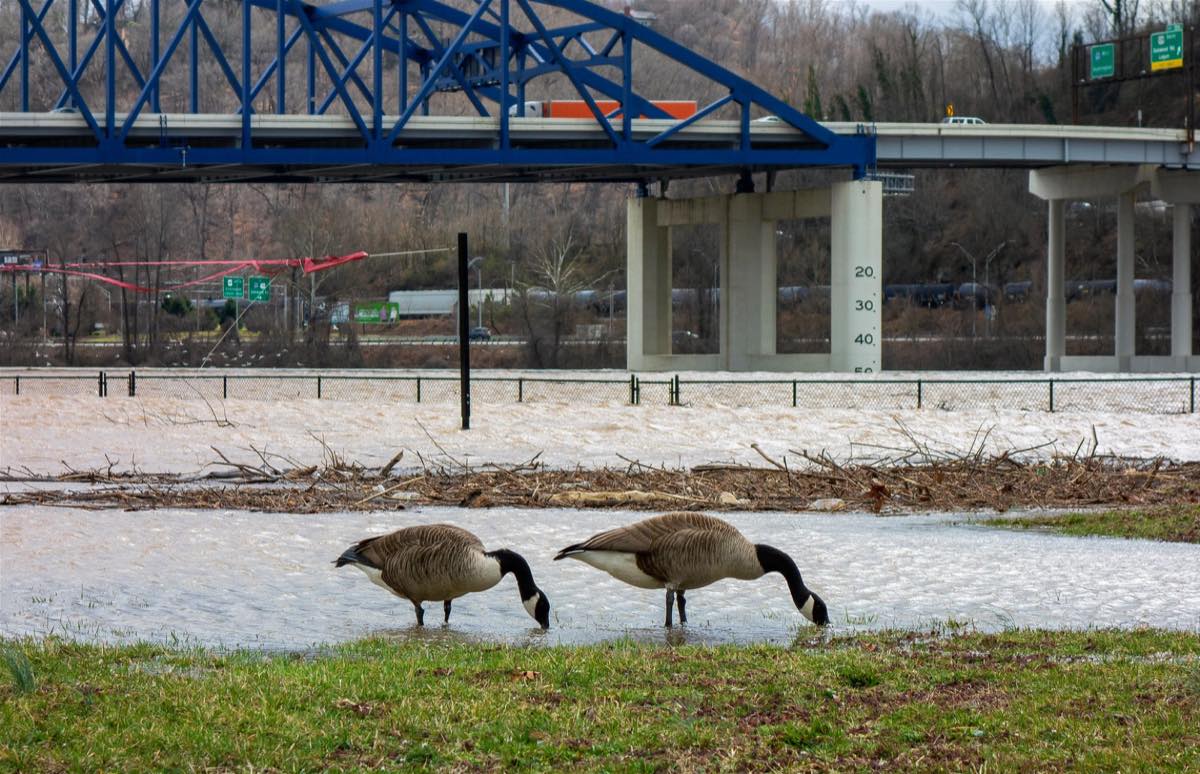
Two Canada geese at the edge of floodwater covering Magic Island, with a depth gauge on the blue Elk River bridge pier behind, February 2019

Kanawha backwater on low streets

When the river runs high it pushes up Magazine Branch, Ferry Branch and Lower Donnally Branch. Crescent Road, Bigley Avenue and the Kanawha Avenue dip can take water with the gauge at 29 to 30 feet, right around minor flood stage.

Call (855) 555-0131 →
34.4°FCharleston’s January average

January freeze-ups in galvanized pipe

January averages 34.4°F, and Charleston sees about 16 days a year when the high stays at or below freezing. Galvanized and cast-iron pipe in pre-1960 homes splits in exterior walls and crawl spaces, then leaks the moment it thaws.

Call (855) 555-0131 →
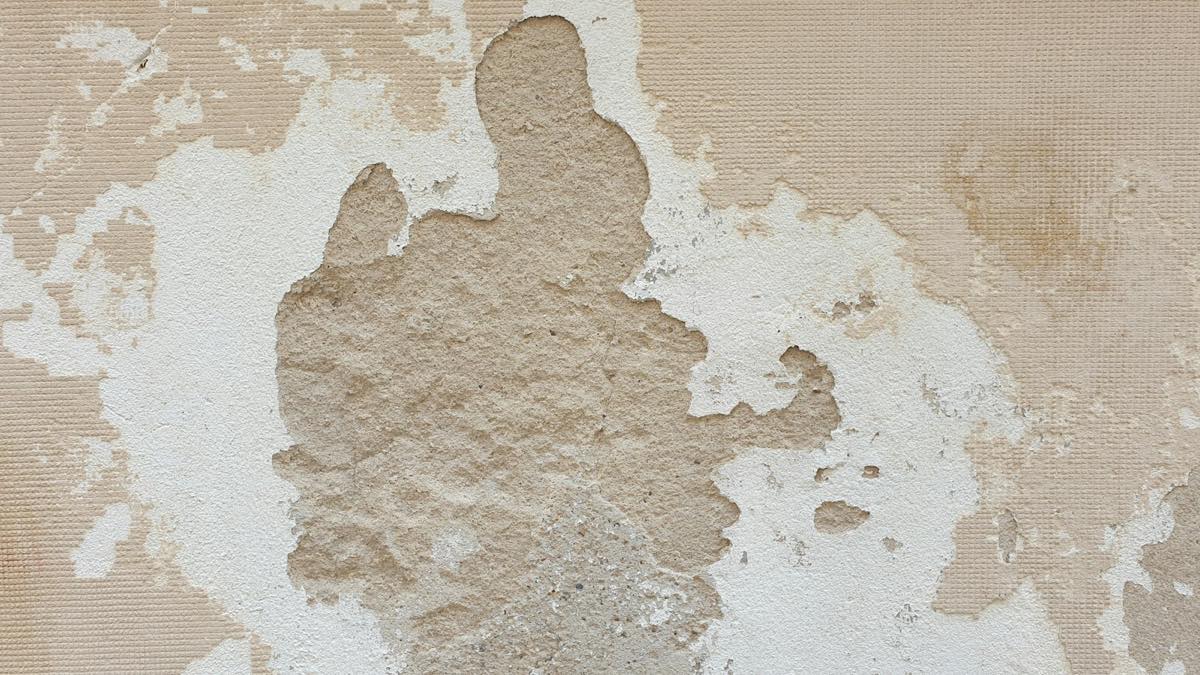
Wall with paint and plaster flaking away after moisture damage

Sewer backup & soaked plaster

Water rising through a basement floor drain is often sewage from the lateral, which IICRC S500 treats as Category 3 black water. Touched carpet, pad and porous trim are usually removed, and the Charleston Sanitary Board takes sewer emergencies at 304-348-6876.

Call (855) 555-0131 →
Why Charleston is different

A narrow valley, old houses and creeks that run backward

Charleston sits at about 597 feet, squeezed between ridges where the Elk meets the Kanawha. Neighborhoods climb toward South Hills, Louden Heights and Fort Hill, and short creek hollows drain everything above them. Three things shape almost every water damage job here.

Driver 1 · Backwater

The creeks flood before the river does

NWS impact notes for the South Side Bridge gauge show the Kanawha backing up Magazine, Ferry and Lower Donnally branches at 29 to 30 feet, long before the river itself tops Kanawha Boulevard. Several low streets take water around the 30-foot minor flood stage.

Driver 2 · Sudden storms

Hollows turn into chutes

In June 2016, 8 to 10 inches fell in under 12 hours across the hardest-hit parts of southern West Virginia, and the Elk crested at a record 33.37 feet at Queen Shoals, upstream of Charleston near Clendenin (NWS). On February 6, 2025, a rare winter thunderstorm flooded Rutledge Road and put water in basements. Then came the storm of August 16, 2026; Mayor Amy Goodwin declared a State of Emergency the next day.

Driver 3 · Housing age

The median house was built in 1957

Of about 25,500 homes, 79.3% predate 1980 and a quarter predate 1940 (ACS 2024 5-year). Plaster, block foundations and old supply lines change how a crew dries a room and what gets tested before demolition.

NWS impact stages, Kanawha River at South Side Bridge

Where the water shows up first

24.5 ftMagic Island splash pads flood
25.5 ftLower riverbank sidewalk on Kanawha Blvd
29 ftCorridor G rail underpass (Ferry Branch) and the Kanawha Ave 4400-block dip
29.5–30 ftCrescent Rd and Bigley Ave via Magazine Branch
35 ftMacCorkle Ave near 33rd–35th Streets in Kanawha City
38 ftPark Ave and the CSX tracks on the West Side

Recent crests: 29.71 ft on March 2, 2021, the highest since 2003, and 27.0 ft on February 17, 2025. The record is 47.6 ft in 1840. Source: NOAA National Water Prediction Service, gauge CRSW2.

Charleston neighborhoods

Kanawha City flats to Louden Heights

A river-bottom block in Kanawha City and a hillside lot in Louden Heights flood in completely different ways. Say whether it came off the hillside, up a creek or out of a pipe, and name the street.

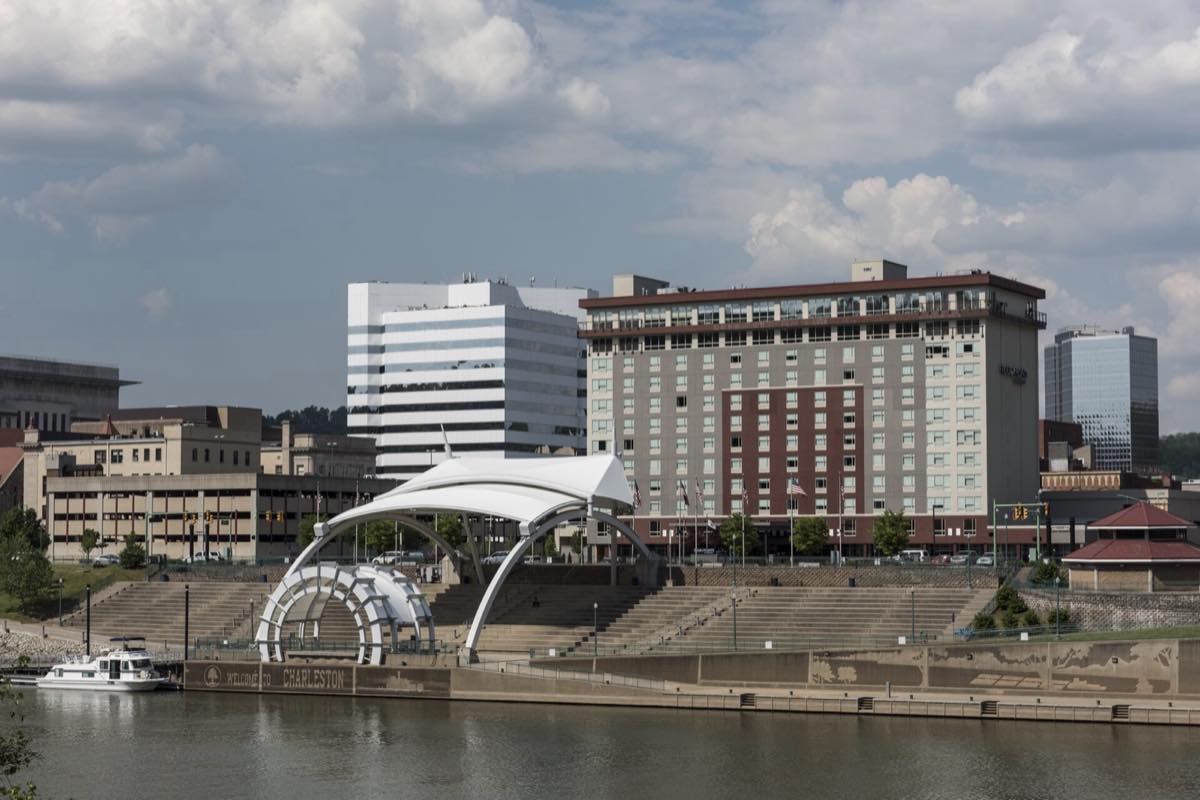
Haddad Riverfront Park amphitheater on the Kanawha River in downtown Charleston Carol M. Highsmith / Library of Congress (public domain)

Downtown near Haddad Riverfront Park

Live on the Levee, Capitol Market on Smith Street and Charleston Catholic. Most of Haddad Riverfront Park floods at 38.7 ft. ZIP 25301.

Riggleman Hall at the University of Charleston in Kanawha City Carol M. Highsmith / Library of Congress (public domain)

Kanawha City & South Ruffner

Flat river bottom along MacCorkle Ave SE, home to the University of Charleston across from the Capitol. Mostly ZIP 25304; addresses at the far east end can be 25306 or 25309.

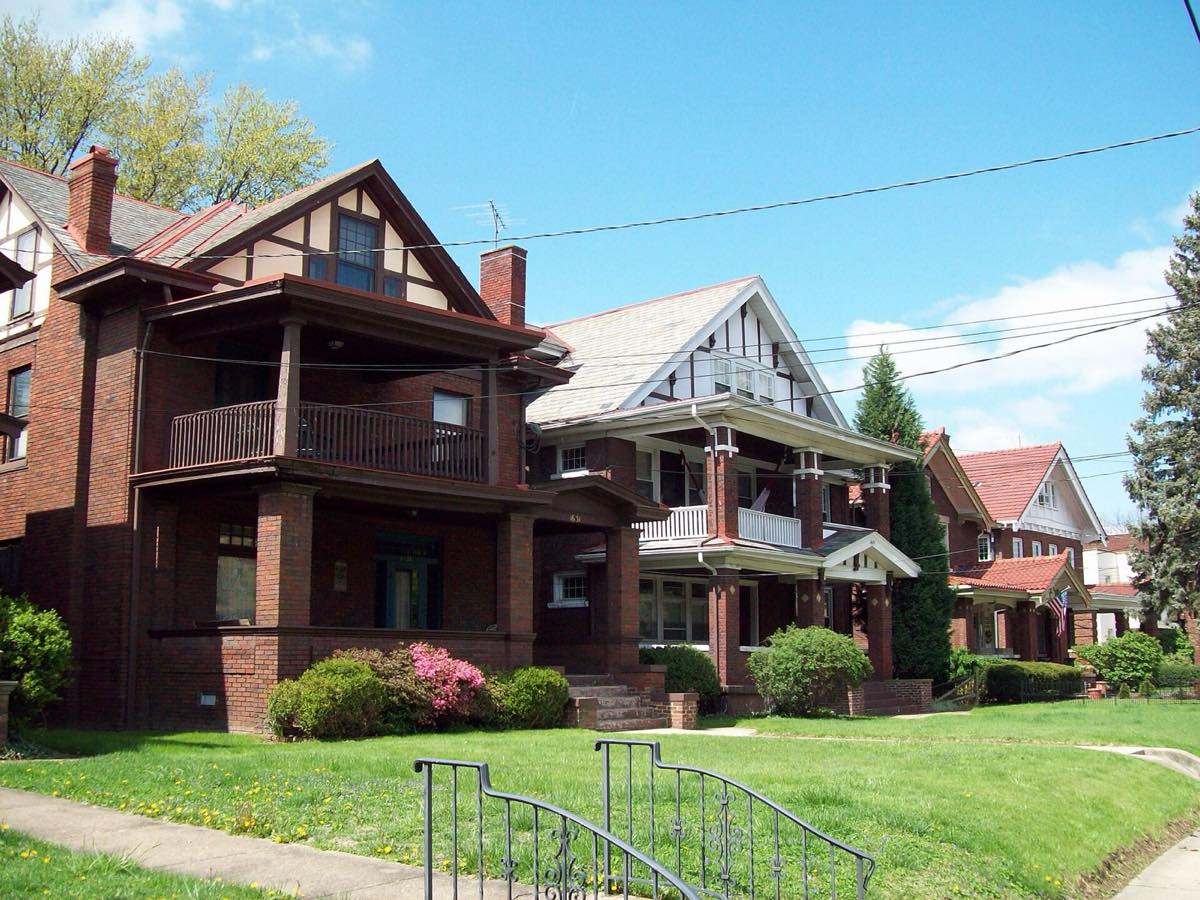
Brick and frame houses from the early 1900s in the East End Historic District Pubdog / Wikimedia Commons (public domain)

East End

Historic-district homes around the Capitol, where old plaster and original plumbing are the norm. The Capitol Complex itself is ZIP 25305.

West Side & Elk City

The older grid west of the Elk, including Magic Island and Elk City. Most of it is ZIP 25387; near-West Side streets such as Bigley Ave are 25302.

Up the hills and hollows too:

Edgewood, Garrison Ave and Valley Road (25302); South Hills, Bridge Road and Louden Heights near George Washington High (25314); Meadowbrook, Greenbrier Street, Capital High, Coonskin Park and Rutledge Road (25311). North Charleston, Fort Hill and the rest of town route the same way: just enter your ZIP when the line asks.

Young man in a mustard sweater on a phone call in his living room
What the call sounds like

Make the call, key the ZIP, name what got wet

  1. 1
    Dial (855) 555-0131

    Any dry phone will do. During an outage, a charged cell is the easy choice.

  2. 2
    Answer the automated question with your ZIP

    The ZIP printed on your mail is all the recording needs; it sets which provider the call goes to.

  3. 3
    Tell them where it came from

    Creek, river, pipe, appliance or floor drain, plus when it started and which rooms are wet. Ask what goes into their written scope and how the price is built. You can say no and call someone else.

Call (855) 555-0131

Money and time, with sources

What restoration costs, and who usually pays

A basement off Rutledge Road that took storm water and a dripping supply line in South Hills will never price the same. The numbers below are HomeAdvisor's 2025 cost figures (page updated June 17, 2026), national rather than Charleston-specific, and meant for sanity-checking a written scope after moisture readings.

Typical job
$1,383–$6,369

From about $450 at the low end to about $16,000 at the far end; the mean HomeAdvisor reports is $3,868.

Per sq ft by IICRC category
$3.50 / $5.25 / $7.50

Clean water (Cat 1), gray water (Cat 2), black water such as creek or sewage (Cat 3).

Drying time
About 5 days

Equipment usually runs close to a work week before a soaked house reads dry, per HomeAdvisor; rebuilding comes later.

Basement
$500–$80,000

The spread HomeAdvisor gives once water reaches a basement.

Ceiling / drywall
$450–$1,600

Ceiling repair; drywall repair alone runs $300 to $850.

Mold removal
$1,100–$3,400

HomeAdvisor's average is $2,225.

Homeowners, flood or sewer rider?

Usually homeowners

Sudden pipe or appliance leak

The Insurance Information Institute says sudden, accidental discharge from plumbing, HVAC or an appliance is covered on HO-2, HO-3, HO-4 and HO-6 policies.

Flood policy only

Creek, river or surface water

Rising water from a creek or Kanawha backwater is excluded from standard homeowners and renters forms. An NFIP policy has a 30-day waiting period and pays up to $250,000 for the structure and $100,000 for contents.

Endorsement only

Sewage forced indoors by a storm

Neither homeowners nor flood insurance covers it unless you bought the sewer-backup endorsement, which III says is usually inexpensive. Check before the next storm.

After the August 16, 2026 flood the City asked residents to file a damage survey so emergency managers could gauge the impact; the City notes it is not an application for financial assistance. Sources: HomeAdvisor, III coverage guide, III flood guide.

Before anyone rebuilds, search their WV number at the state board. The WV Contractor Licensing Board, run through the Division of Labor from Building 3 of the Capitol Complex, licenses contractors statewide. Under W. Va. Code §30-42-3, a license is required for residential work costing $5,000 or more and commercial work of $25,000 or more. Older guides still list the former $2,500 threshold.

  1. Ask the company for its license number. It starts with “WV.”
  2. Search it at wvclboard.wv.gov/verify, or search by name, classification or location.
  3. Rebuilding drywall, floors or plumbing falls under the residential or specialty classes, plus licensed trades for plumbing and electrical.
  4. On a project of $10,000 or more, the Board's rule (28 CSR 4) requires a written contract first, listing the license number, dates, total price, payment schedule and workers' comp account number.
  5. Inside city limits, permits come from the City of Charleston Building Department at 915 Quarrier Street (304-348-6833). Contractors must also register with the City Collector and carry a current certificate of insurance.

Questions or complaints: WV Contractor Licensing Board, (304) 558-7890, weekdays 8 to 5, or file a complaint online.

Charleston questions

What Charleston homeowners want to know before the fans go in

If your floor is still wet, skip the reading and dial.

Call (855) 555-0131

What does the recording on the Charleston line want from me?

Your ZIP code, nothing else. Charleston spans several, so 25302 in Edgewood and 25314 in South Hills can ring through to different companies. You pay nothing to dial, and you owe the company that answers nothing unless you choose to hire it.

Does homeowners insurance pay when Kanawha backwater reaches my basement?

Usually not. Creek or river water in the basement is a flood claim, and the Insurance Information Institute notes standard homeowners and renters forms exclude it. That takes an NFIP policy, which kicks in after a 30-day wait and caps at $250,000 for the building and $100,000 for belongings. Sewage pushing up through a basement drain falls outside both policies unless a sewer-backup endorsement was added. Where homeowners coverage usually does apply is a pipe or appliance that suddenly lets go.

My house was built in the 1950s. Does that change the job?

Often, yes. Half of Charleston's homes went up in 1957 or earlier, and 56.4% are older than 1960 (ACS 2024 5-year). Expect questions about galvanized or cast-iron pipe, plaster walls, stone or block basements, and lead or asbestos before anything is torn out. The City of Charleston requires an asbestos report for demolition permits.

What does water damage restoration cost?

HomeAdvisor's 2025 data (page updated June 17, 2026) has most U.S. jobs landing between $1,383 and $6,369. Per square foot, Category 1 clean water runs about $3.50, Category 2 gray water $5.25 and Category 3 black water $7.50, the bracket creek, river and sewage water fall into. The number that counts is the written scope a provider gives after walking the wet rooms.

Which state site shows whether a restoration company holds a WV license?

On the WV Contractor Licensing Board's site, wvclboard.wv.gov/verify. You can search by the number itself (it begins with WV), by company name, classification or location. W. Va. Code 30-42-3 requires a license for residential jobs of $5,000 or more, and the Board's rule calls for a written contract before work begins on any project of $10,000 or more.

Who am I actually talking to after the ZIP prompt?

Whichever independent restoration business has signed up to answer calls from your ZIP. Fixly Pro's part ends once the call connects, so license, insurance, scheduling and price are all questions for that business.

Father and son playing an acoustic guitar together on the living-room sofa

Creek mud or a split line, start with one call

Hillside runoff, Kanawha backwater or a burst pipe in the crawl space: dial, enter your Charleston ZIP, then describe the water.

(855) 555-0131 Tap to call now
Call (855) 555-0131 Have 25301, 25302 or your own ZIP ready